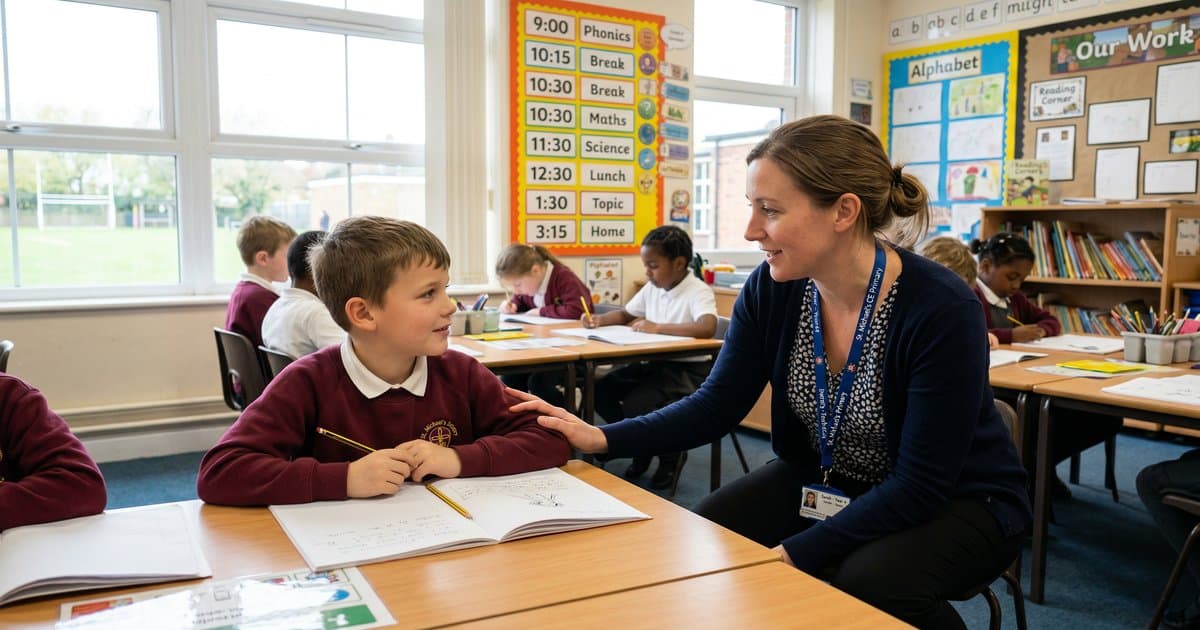
Trauma-informed classroom behaviour strategies are practical ways to prevent and respond to behaviour by recognising how stress and adversity shape a pupil’s nervous system, learning, and relationships. They prioritise emotional and physical safety, predictable routines, co-regulation, and restorative repair so pupils can re-engage with learning and adults can reduce escalation and exclusion.
- Trauma-related behaviour is often a stress response, so the most effective first intervention is safety and connection.
- Predictability, clear boundaries, and consistent adult responses reduce uncertainty and lower the likelihood of escalation.
- Co-regulation comes before self-regulation, so calm adults, simple scripts, and supportive spaces matter more than consequences in the moment.
- Restorative conversations repair relationships and teach accountability without triggering shame or threat responses.
- Whole-school alignment with families and multi-agency partners improves consistency and reduces mixed messages for pupils.
Why trauma can show up as “distressed behaviour” in the classroom
When pupils have experienced adversity, their brains and bodies can learn to scan for danger, even in ordinary school situations. What looks like “defiance” might be a fight response, while silence and disengagement might be a freeze response. In both cases, the pupil is often trying to stay safe, not trying to cause harm.
This matters because traditional behaviour systems can accidentally increase threat. Public corrections, unpredictable sanctions, or rapid adult escalation can reinforce a pupil’s belief that adults are unsafe. A trauma-informed approach shifts the question from “What’s wrong with you?” to “What has happened, and what do you need to feel safe enough to learn?”
Common classroom triggers to look for
Triggers are highly individual, but schools often see patterns. Sudden changes to routines, crowded corridors, perceived unfairness, sensory overload, or adult tone can all act as threat cues. A pupil may not have the language to explain what is happening internally, so their body communicates it through behaviour.
Instead of trying to eliminate every trigger, focus on strengthening protective factors: predictability, trusted relationships, and supportive regulation tools. Those factors reduce sensitivity over time and increase tolerance for normal classroom demands.
A note on language and labelling
Be cautious about describing pupils as “manipulative”, “attention-seeking”, or “non-compliant”. Those labels can close curiosity and lead adults to respond with control rather than support. Use descriptive language instead, such as “struggled to transition” or “left the room when overwhelmed”, which keeps the door open to problem-solving.
Spotting trauma-related behaviour early (without making assumptions)
Trauma-informed practice does not mean diagnosing pupils or trying to uncover personal history. It means noticing patterns that suggest stress, adapting your approach, and involving the right support at the right time. Many pupils will never disclose trauma, and they do not need to for you to offer safety and predictable care.
Look for changes from a pupil’s baseline. A previously engaged pupil becomes withdrawn, a calm pupil becomes hypervigilant, or a pupil’s concentration drops sharply. Physical complaints, social isolation, or sudden conflict with peers can also be important signals.
Quick identification that supports safeguarding
A simple, consistent observation routine helps staff act early. Use a brief behaviour log that records what happened before, during, and after an incident, including adult responses and environmental factors. When patterns appear, share them with the pastoral team, SENCO, or designated safeguarding lead so the school response is coordinated.
Where appropriate, link patterns to practical adjustments: seating, transitions, sensory supports, or adult check-ins. Small changes can prevent repeated escalation and reduce the likelihood of restrictive responses later.
Building safety and trust through predictable routines and relationships
Safety is not just physical. Pupils also need psychological safety: adults who are consistent, boundaried, and calm enough to help them recover from stress. The strongest trauma-informed strategy in any classroom is a reliable relationship that pupils can predict, even when they are dysregulated.
Routines support that predictability. Visual timetables, clear “start of lesson” rituals, consistent transitions, and advance warnings for change can reduce anxiety. Keep boundaries clear and kind: pupils need to know what will happen next and how adults will respond.
Daily relational habits that lower anxiety
Start with a warm greeting and brief connection, especially after weekends or absences. Use short, genuine noticing statements like “I’m glad you’re here” or “I can see today feels hard”. Keep it simple and consistent so it does not feel performative.
Build in a quick check-in routine such as a feelings scale or a private signal pupils can use when they are close to overwhelm. If your school is developing a whole-setting approach, the schools behaviour support hub can help you align classroom practice with wider policy.
Designing a calming classroom environment
Consider sensory load. Busy walls, constant noise, harsh lighting, and crowded seating can increase stress for some pupils. A calming space does not need to be a separate room. It can be a predictable corner with a simple visual prompt, a timer, and a short list of regulation options.
Make access to calm spaces structured and dignified. Avoid using them as punishment. Instead, frame them as a skill-building support: “This is where we practise getting back to learning.”
Teaching regulation skills: co-regulation first, then self-regulation
When pupils are dysregulated, their capacity for reasoning and reflection is reduced. In that moment, teaching is less effective than co-regulation: an adult lending calm through tone, pace, and supportive structure. Once the pupil is calm, you can then teach and rehearse skills for next time.
Regulation teaching is not a one-off lesson. It is a routine, like literacy. Pupils benefit from frequent, low-pressure practice of simple strategies, especially when they are already calm.
Practical tools pupils can use in real time
Teach a small set of consistent options. Breathing patterns (such as a slow inhale and longer exhale), a grounding technique (name five things you can see), or a short movement break can all help. Visual emotion charts and “feelings vocabulary” give pupils language for what is happening internally.
Role-play phrases pupils can use to request support: “I need a minute”, “This is too loud”, or “Can I move seats?” Practise these scripts during calm moments so they are available under stress.
Adult scripts that prevent escalation
In tense moments, less language is often better. Use short, respectful statements: “You’re safe”, “I’m here”, “Let’s slow it down”, and “We can talk when you’re ready”. Keep tone neutral and avoid power struggles, especially in front of peers.
If your team wants to build a consistent de-escalation language across classrooms, consider de-escalation training designed to reduce incidents while protecting dignity.
Soft CTA: If you want to see how these strategies translate into whole-school practice, explore upcoming training events and webinars for education settings.
Restorative approaches: repair, accountability, and learning after incidents
Trauma-informed behaviour support does not remove boundaries. It changes how boundaries are held, especially after harm. Restorative practice helps pupils understand impact, rebuild trust, and learn replacement behaviours. It also reduces cycles of shame and retaliation that can follow punitive responses.
Keep restoration structured. The goal is not a long emotional conversation in the corridor. It is a calm, staged process that happens when everyone is regulated enough to reflect.
A simple restorative sequence staff can use
After the incident, start with regulation and safety. Then use a short reflection framework: “What happened?”, “What were you feeling?”, “Who has been affected?”, and “What needs to happen now?” Keep questions curious and avoid cross-examination.
Where repair is needed, make it achievable: a brief apology, replacing damaged materials, or a plan for next time. Ensure the pupil experiences success in making things right, not just discomfort for doing wrong.
When consequences are still appropriate
Some consequences are necessary to maintain safety and fairness. Trauma-informed practice asks you to ensure consequences are proportionate, predictable, and paired with teaching. If a pupil is sent out, what skill will be rehearsed before they return? What adult support is in place to prevent repeated removals?
For schools supporting complex needs, a consistent framework alongside positive behaviour support training can help staff connect incidents to proactive plans, not just reactive sanctions.
Whole-school consistency: staff wellbeing, partnerships, and culture
Trauma-informed classrooms work best when the wider system supports them. Staff need shared language, shared thresholds, and practical plans for difficult moments. Without alignment, pupils experience unpredictable adult responses, which can increase dysregulation.
Consistency also protects staff. When teams agree on approaches, individuals feel less isolated and less likely to escalate under pressure. This is particularly important in schools with high levels of distress behaviour, where staff can experience cumulative stress and burnout.
Support staff so they can support pupils
Build routines for reflective practice: brief post-incident debriefs, supervision where appropriate, and peer support. When adults are overwhelmed, they are more likely to react quickly, use punitive language, or miss early signs of escalation.
ProActive Approaches is a BILD Act (RRN) certified training provider with 30+ years experience supporting services to reduce restrictive practices through prevention, relationships, and skilled response.
Working with families and multi-agency partners
Trauma-informed work is strongest when school and home are not pulling in different directions. Communicate early, share positives, and agree a small number of consistent strategies. Keep language non-judgemental: “We’re noticing overwhelm during transitions - here’s what helps at school.”
Where pupils have external support, align plans with therapists, virtual school teams, and social care colleagues. Consistency across adults reduces the pupil’s cognitive load and improves trust.
Mid CTA: To strengthen staff confidence and consistency, explore trauma-informed practice training and practical behaviour support resources that help teams respond with skill, not stress.
Practical application: 5 strategies you can implement this week
- Create a predictable start-of-lesson routine - use the same three steps (greeting, agenda, first task) so pupils know what to expect and can settle faster.
- Add a private “help” signal - agree a discreet card, gesture, or desk sign pupils can use to request support or a brief break without attention from peers.
- Teach one regulation tool daily for two minutes - practise when calm (breathing, grounding, movement), then reference it during stress: “Let’s use the tool we practised.”
- Use a short de-escalation script - keep language minimal, slow your pace, and offer two choices: “You can sit here quietly or move to the calm space.”
- Schedule a restorative repair window - plan a consistent time for repair conversations after incidents so pupils learn that reflection happens when safe, not during escalation.
FAQ
Is trauma-informed practice the same as being “soft” on behaviour?
No. Trauma-informed classrooms still hold boundaries and expectations, but they deliver them in ways that reduce threat and increase learning. The difference is that staff prioritise safety and regulation first, then teach replacement skills and use restorative repair. This approach improves consistency and reduces repeated incidents over time.
What if a pupil refuses to engage or talk?
Give space without withdrawing connection. Offer low-demand options such as drawing, a simple choice, or sitting quietly near an adult. Avoid forcing eye contact or immediate explanations. When the pupil is calmer, reconnect privately and reflect using short, curious questions. Many pupils communicate safety through behaviour before words.
How do we balance individual needs with fairness for the whole class?
Explain supports as equity rather than special treatment: different pupils need different tools to access learning. Keep adjustments predictable and structured (for example, a standard break card used by several pupils). When routines are clear, other pupils are less likely to see support as “getting away with it”, and classroom culture stays stable.
When should we involve specialist support?
Involve pastoral, SEND, or safeguarding leads when behaviour changes sharply, incidents escalate in frequency or intensity, or staff are unsure about risk. Early collaboration prevents crisis-driven responses. A joint plan that includes triggers, early signs, and agreed adult responses often reduces removals, exclusions, and repeated dysregulation.
Where can our school get training that aligns with restraint reduction?
Choose training that strengthens prevention, de-escalation, and therapeutic relationships, not just incident response. ProActive Approaches delivers BILD Act (RRN) certified programmes that support whole-school consistency and help settings reduce restrictive practices. Explore options for education teams, including training pathways and scheduled sessions via the events page.
Closing CTA: If you want to embed trauma-informed classroom behaviour strategies across your school, ProActive Approaches can help with practical, trainer-led support. Get in touch to discuss training that builds confidence, reduces escalation, and strengthens relationships so pupils can feel safe enough to learn.