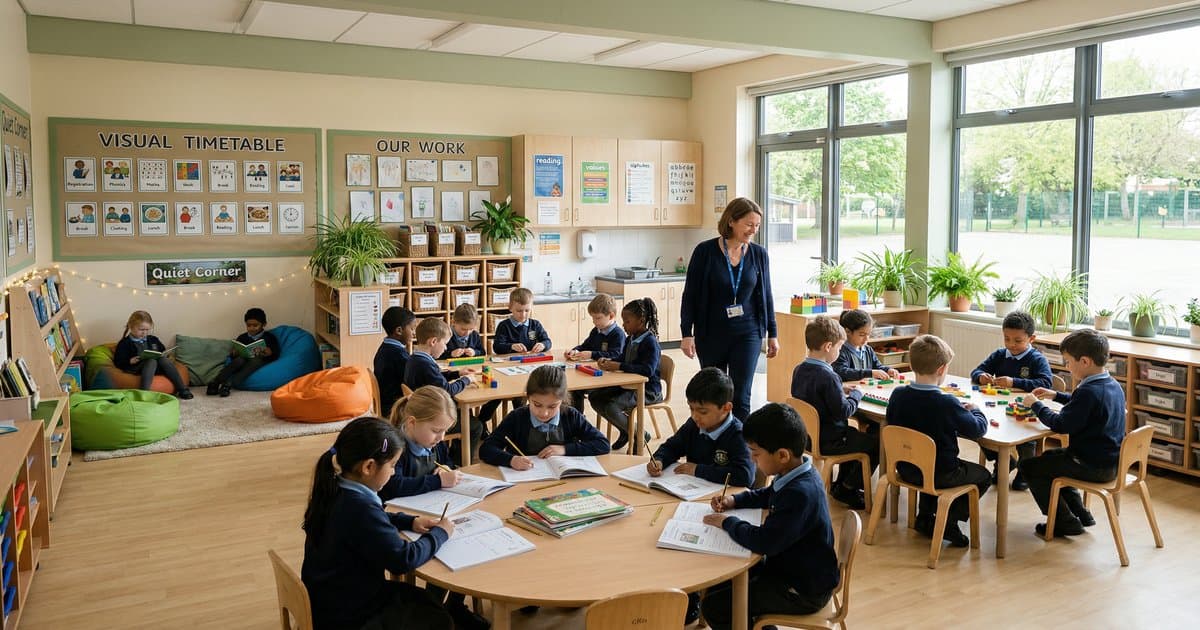
Trauma can significantly affect learning because a child’s brain may prioritise safety over thinking, which can reduce attention, memory, emotional regulation and the ability to form trusting relationships in school. In a trauma-sensitive classroom, adults use predictable routines, calm communication and relationship-based support so pupils feel safe enough to engage, take risks and learn.
- Trauma responses can look like “behaviour problems”, but they are often stress responses that need safety, co-regulation and skill-building.
- Consistency and predictability reduce threat and help pupils access learning.
- Relationships are an intervention - trust, repair and connection come before correction.
- Teaching regulation skills (not just expecting them) supports attendance, engagement and attainment.
- Staff wellbeing matters - reflective practice and support reduce burnout and secondary stress.
What do we mean by trauma and why does it affect learning?
Trauma is not only what happened to a child - it is also how their nervous system and sense of safety were affected. When children have experienced frightening, painful or overwhelming events (including ongoing stress), their bodies can become primed for danger.
In school, this can mean the child’s brain is scanning for threat rather than focusing on learning. The result is often uneven progress: a pupil may appear capable one moment and completely “stuck” the next.
Common ways trauma can show up in the classroom
- Attention and concentration difficulties - easily distracted, appearing “not present”.
- Emotional dysregulation - rapid escalation, shutdown, tearfulness or anger.
- Executive functioning challenges - planning, organising, starting tasks and flexibility.
- Negative self-beliefs - “I’m stupid”, “I can’t”, fear of failure.
- Relationship and trust difficulties - avoiding adults, testing boundaries, conflict with peers.
Recognising trauma responses (without diagnosing)
Teachers do not need to diagnose trauma to respond in a trauma-sensitive way. Your role is to notice patterns, reduce triggers where possible and provide the support that helps a child return to learning.
Physical signs
- sleep disruption, fatigue or frequent complaints of headaches and stomach aches
- hypervigilance, heightened startle response or appearing constantly “on edge”
- changes in appetite or energy across the day
Behavioural signs
- withdrawal, avoidance and isolation
- aggression, arguing, defiance or frequent conflict
- avoidance of reminders (certain topics, places, people or activities)
- regression under stress (appearing younger than their age during difficult moments)
Emotional signs
- intense anxiety, fear, panic or worry that seems “out of proportion”
- numbing or detachment (flat affect, “I don’t care”)
- low mood, shame and hopelessness
- difficulty trusting adults and peers
How to create a trauma-sensitive classroom environment
A trauma-sensitive classroom is not “lower expectations”. It is high support with clear structure - so pupils can meet expectations with the right scaffolding.
1) Build predictability and felt safety
Predictability reduces uncertainty, which can be a major trigger for pupils who have experienced trauma.
- Make routines visible: visual timetables, now-next boards, clear lesson structures.
- Prepare for transitions: countdowns, prompts, and a consistent transition script.
- Use calm, clear boundaries: a few rules stated positively, reinforced frequently.
- Reduce sensory overload: consider noise, lighting, clutter and seating options.
2) Practise co-regulation before expecting self-regulation
Many pupils cannot “calm down” on demand if their nervous system is activated. Co-regulation means adults lend calm through voice, body language and paced responses.
- Use a slower pace, lower volume and simple language during escalation.
- Offer a brief regulated presence first - then problem-solve later.
- Create a calm space or “regulation station” with clear rules for use.
3) Teach coping and regulation skills explicitly
Regulation skills are learned, not assumed. Build them into daily practice rather than only using them when a pupil is already distressed.
- Teach breathing, grounding and sensory strategies (for example, 5-4-3-2-1, wall pushes, paced breathing).
- Use simple emotion language and tools (feelings charts, zones, check-ins).
- Plan micro-breaks and movement opportunities, especially after cognitively demanding tasks.
4) Strengthen belonging and positive identity
Trauma often damages self-worth. A strengths-based approach helps pupils rebuild a sense of competence and connection.
- Notice and name effort, strategies and progress (not only outcomes).
- Give meaningful roles in class (helper tasks, peer support, classroom jobs).
- Use choice where possible to increase agency (choice of order, format, or partner).
5) Use restorative responses to repair and reconnect
When things go wrong, prioritise repair. Restorative approaches reduce shame and help pupils learn safer ways to manage conflict.
- After an incident, revisit expectations with curiosity: “What was happening for you?”
- Use brief restorative conversations: harm, impact, responsibility, repair and next steps.
- Make repair concrete and achievable (a note, a tidy-up, a re-do, a conversation supported by an adult).
Adult mindset: reduce bias and increase curiosity
Trauma-sensitive practice asks us to shift from “What’s wrong with you?” to “What happened to you, and what do you need right now?” This mindset helps staff respond with professionalism and compassion, especially when behaviour is challenging.
Practical reflection prompts for staff
- What situations reliably precede this behaviour (times, tasks, people, transitions)?
- What might this pupil be communicating or protecting themselves from?
- What support would help them succeed in the next five minutes?
- How do my own stress levels affect my response?
Work as a team: support plans, specialists and families
Trauma-sensitive classrooms work best when they sit within a joined-up approach across the school and wider network.
Collaborate with your school team
- Share observations and patterns with the SENCO, safeguarding lead and pastoral team.
- Agree consistent responses so pupils experience predictable adult behaviour.
- Create simple, proactive plans (for example, transition support, check-in routines, or regulated exits).
Connect with families and carers
- Communicate early and positively, not only when something has gone wrong.
- Ask what helps at home and share what helps in school, aiming for consistency.
- Offer supportive signposting where appropriate, following your safeguarding procedures.
Staff wellbeing and professional development
Supporting pupils affected by trauma can be emotionally demanding. Schools that sustain trauma-sensitive practice invest in supervision, reflective spaces and ongoing training.
- Use brief debriefs after incidents to reduce stress and improve learning.
- Encourage supportive peer consultation and coaching for tricky situations.
- Review systems that may inadvertently increase threat (for example, public behaviour charts or punitive responses without repair).
Want to strengthen trauma-responsive practice in your school?
ProActive Approaches delivers BILD Act (RRN) certified training in trauma-responsive, attachment-aware behaviour support. If you want practical tools that reduce incidents and help pupils feel safe enough to learn, explore our training options and book a call with our team.
FAQ
What is the difference between trauma-informed and trauma-sensitive practice?
Trauma-informed practice is a whole-organisation approach that understands how trauma affects people and designs systems accordingly. Trauma-sensitive practice focuses on day-to-day interactions and environments that reduce triggers and promote safety, regulation and connection.
Do trauma-sensitive classrooms lower expectations for behaviour and learning?
No. Trauma-sensitive classrooms keep expectations clear and consistent, while increasing scaffolding, teaching regulation skills, and using responses that help pupils re-engage with learning.
What should I do if I suspect a pupil has experienced trauma?
Focus on creating safety, noticing patterns and using supportive strategies, while following your school safeguarding procedures. Share concerns through the appropriate channels rather than investigating yourself.
Inspired by the themes in ProActive Approaches’ article on creating trauma-informed classrooms.
For a whole-school approach to trauma-informed practice, see our ProActive Schools programme.