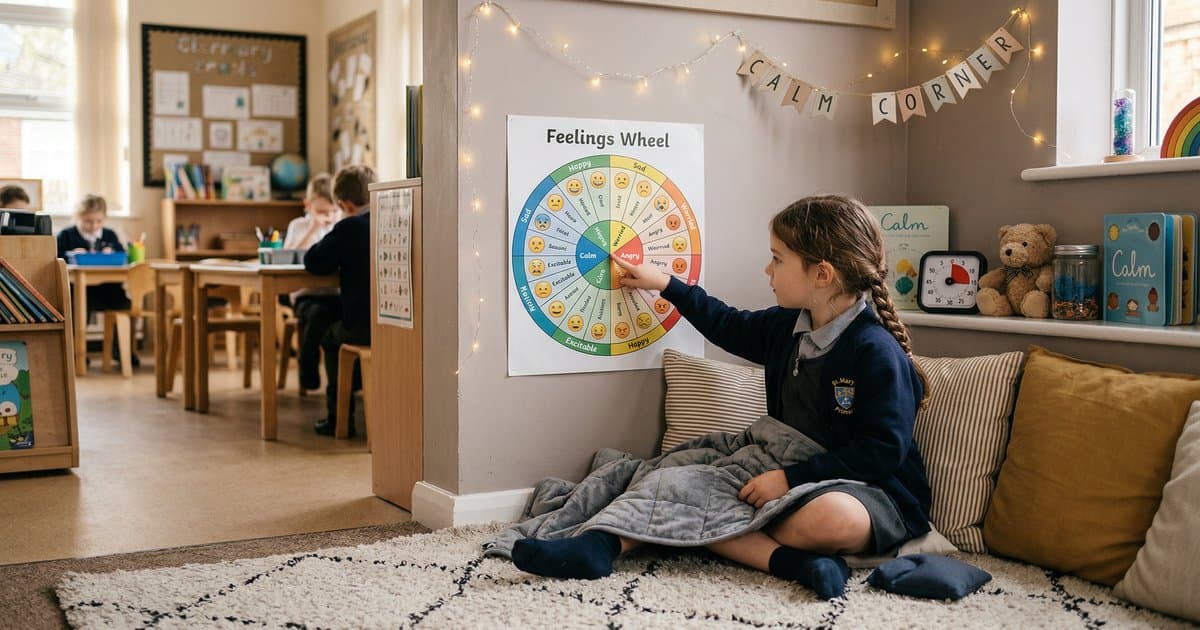
Supporting emotional regulation in trauma-informed teaching is the day-to-day practice of helping pupils move from stress-driven survival states back into a calm, learning-ready state through predictable safety, compassionate boundaries, and co-regulation. It recognises that dysregulation is often a stress response, not deliberate defiance, and it builds practical skills for pupils and staff to use before, during, and after difficult moments.
- Regulation comes before learning - pupils need felt safety and connection before they can think, remember, and problem-solve.
- Early intervention matters - noticing the first signs of stress prevents escalation more effectively than responding at crisis point.
- Co-regulation is a skill - your tone, pace, posture, and predictability are often the most powerful tools in the room.
- Teach strategies when calm - breathing, grounding, and coping plans should be practised in ordinary moments, not only during incidents.
- Structure reduces threat - routines, clear transitions, and respectful boundaries lower stress for pupils affected by trauma.
- Staff wellbeing is safeguarding - sustainable practice requires support for secondary traumatic stress and high-pressure days.
Why emotional regulation matters in trauma-informed teaching
Emotional regulation is the ability to notice feelings, name them, and manage responses in ways that keep us safe and connected. In school, regulation is what allows pupils to cope with demands like transitions, feedback, peer conflict, and uncertainty. When a pupil has experienced trauma, their stress response can activate quickly and stay activated for longer, which can make learning and relationships feel much harder.
In trauma-informed teaching, regulation is not a bolt-on. It is the foundation for behaviour support, attendance, engagement, and inclusion. When pupils feel unsafe, their brains prioritise survival over learning. You may see fight, flight, freeze, or fawn responses that look like behaviour challenges but are often communication of need.
A practical way to view trauma-informed regulation is through three linked commitments: protect safety, build connection, and teach skills. Safety means predictability and low threat. Connection means warm, respectful relationships. Skills mean pupils have simple tools to use when feelings rise.
This approach aligns with behaviour support frameworks that focus on prevention and de-escalation before any restrictive response is considered. If your school is strengthening consistency across staff teams, you may find it helpful to explore trauma-informed practice training alongside behaviour support planning.
Regulation as access to learning
When pupils are regulated, you will typically see greater flexibility, improved working memory, and more social problem-solving. When they are dysregulated, you may see rigid thinking, increased sensitivity to perceived threat, and reduced capacity to use language. This is why a calm adult response is not indulgent - it is an access strategy.
Trauma-informed is not trauma-specific
Trauma-informed teaching does not require staff to know a pupil’s history or to act as therapists. It means responding in ways that reduce re-traumatisation and increase capacity. The focus is: what is this behaviour telling us, what helps this pupil feel safe, and what do we want them to be able to do next time?
Recognising emotional dysregulation in pupils
Dysregulation is rarely a conscious choice in the moment. It is often a stress response that has tipped beyond the pupil’s ability to self-manage. Recognising early signs helps you intervene sooner and more quietly, which protects dignity and reduces disruption for everyone.
Common behavioural signs (what it can look like)
- Confrontation - shouting, swearing, arguing, refusing, pushing limits.
- Impulsivity - blurting out, grabbing, running, difficulty stopping.
- Withdrawal - shutting down, hiding, leaving tasks, saying “I don’t care”.
- Transition distress - escalating around change, timetable shifts, or endings.
Common emotional and physiological signs (what may be happening underneath)
- Big feelings that arrive fast - fear, shame, panic, anger, sadness.
- Hypervigilance - scanning, startle responses, “always on edge”.
- Body signals - tight jaw, clenched fists, fast breathing, restless legs.
- Numbing - flat affect, seeming distant, difficulty speaking or thinking.
Patterns that help you intervene earlier
Look for patterns rather than isolated incidents. Consider time of day, tasks that involve uncertainty, peer proximity, sensory load, and adult interactions. A pupil may cope in structured lessons but struggle in unstructured spaces such as corridors, lunch, or group work. Mapping patterns helps you prevent, rather than merely respond.
When staff teams share a common language for early signs, responses become more consistent. That consistency is often what pupils interpret as safety.
Classroom tools that support emotional regulation (without singling pupils out)
Choose a small set of tools and teach them explicitly. Practise them as everyday routines so that regulation becomes normal, not a “special intervention”. Many pupils benefit from the whole class learning the same simple strategies.
Brief mindfulness and relaxation routines
Keep mindfulness short, practical, and optional. For some pupils, closing eyes or focusing inward can feel unsafe. Offer a range of ways to participate.
- Breathing cues - “smell the flower, blow the candle”, or counting breaths to five.
- Grounding - notice five things you can see, four you can feel, three you can hear.
- Muscle release - tense and relax hands, shoulders, jaw, then feet.
- Movement regulation - wall push-ups, stretches, or a short walk with an adult.
A planned calm space that supports return to learning
A calm space is not a punishment. It is a planned option for reducing stress and regaining control. The key is that it includes a clear pathway back to learning, so it supports coping rather than avoidance.
- Designated area - quiet, comfortable, with agreed expectations.
- Communication supports - a break card, a hand signal, or a simple script.
- Sensory tools - fidgets, weighted lap pads, noise-reducing headphones, used with thoughtful risk assessment.
Emotion vocabulary and check-ins
Many pupils have big feelings but limited words for them. Teaching emotion vocabulary increases self-awareness and reduces escalation. Use simple tools such as feelings charts, zones, or “engine levels”. Build short check-ins into the day so pupils can ask for support before crisis.
If you want to see how other settings are building regulation routines across a whole organisation, keep an eye on upcoming training events and course dates, where practitioners often share what is working in real schools.
Co-regulation: what adults do that helps pupils settle
Pupils learn regulation through relationships. Co-regulation is the process of an adult using their calm presence, steady boundaries, and supportive prompts to help a pupil return to a manageable state. It is not “letting things go”. It is actively leading the nervous system back to safety.
Use a low-arousal approach
When emotions rise, use fewer words, a calm pace, and non-threatening body language. Give physical space where appropriate. Avoid rapid questioning or lecturing. Keep your message simple and consistent: you are safe, I am here, we will get through this.
- Lower your voice rather than raising it.
- Slow down your speech and movements.
- Offer short, doable choices rather than open-ended debate.
Replace “Why?” with “What helps?”
In the moment, “Why did you do that?” often increases shame and threat. Try questions that reduce pressure and move towards safety: “What’s going on for you?”, “Do you need space or support?”, “Which option helps you right now?” Curiosity communicates respect and reduces escalation.
Repair after the moment, not during it
Once the pupil is calm, focus on repair and learning. Keep conversations brief and restorative: what happened, what were you feeling, what help would you like next time, and how can we put things right? This supports accountability without humiliation.
ProActive Approaches teams often support schools to embed these skills with consistent language and practice, as part of de-escalation training that prioritises dignity and prevention.
Teaching self-regulation skills explicitly (so pupils can use them independently)
Co-regulation is the bridge, but the aim is growing independence. Pupils are more likely to use strategies when they have rehearsed them when calm, know what each strategy is for, and have adults who prompt them consistently. Consider building a small “regulation curriculum” into tutor time, PSHE, or daily routines.
Help pupils notice early signs
Teach pupils to recognise their own early body signals. Keep it simple: “What does it feel like in your body when you start to get overwhelmed?” Some pupils benefit from drawing a body outline and labelling sensations. The goal is early awareness, not perfect insight.
Create a coping menu and practise it
Work with pupils to choose three to five strategies that they agree are helpful. Link each strategy to a situation, for example: “When I feel my chest tighten, I can use grounding”, or “When I feel embarrassed, I can ask for a break”. Practise the menu during calm moments so it becomes familiar.
Plan for triggers using simple if-then scripts
Many pupils benefit from short scripts they can remember: “If I feel overwhelmed, then I can use my break card.” Keep plans realistic and teach them like any other classroom routine. Rehearse them, praise small successes, and refine them over time.
Hold boundaries with compassion
Trauma-informed teaching is not permissive. Boundaries are part of safety. Keep expectations clear and consistent, and deliver them with warmth. A useful internal check is: “Am I trying to control this pupil, or am I trying to keep everyone safe and support learning?”
Supporting staff emotional regulation and reducing secondary traumatic stress
Working with trauma-affected pupils can be emotionally demanding. If staff feel constantly on alert, it becomes harder to offer calm co-regulation. Supporting staff regulation is not a luxury - it is part of safeguarding pupils, staff retention, and whole-school culture.
Recognise secondary traumatic stress
Secondary traumatic stress can develop when you are repeatedly exposed to others’ distress. It can show up as irritability, emotional exhaustion, sleep difficulties, or intrusive thoughts about incidents. Naming it reduces stigma and helps staff access support sooner.
Build realistic recovery routines into the school day
- Micro-resets - 60 seconds of breathing, water, or a short walk after a difficult interaction.
- Debriefing - structured, blame-free reflection after incidents that focuses on learning and safety.
- Clear boundaries - where possible, agree reasonable cut-offs for email and planning.
- Peer support - regular check-ins, not only when things go wrong.
Why training consistency supports staff wellbeing
Staff stress often rises when expectations and responses vary between adults. Consistent approaches reduce conflict, uncertainty, and the feeling of “being on your own”. ProActive Approaches provides BILD Act (RRN) certified training designed to build shared language, shared skills, and safer practice across teams. Many organisations report a sustained 80% reduction in incidents when prevention, de-escalation, and consistent behaviour support are embedded across the setting.
Practical application: 5 implementable strategies
- Start with a predictable “soft start” - greet pupils by name, share the lesson plan visually, and offer a short settling routine so the room begins in regulation.
- Use an early-signs checklist - agree three to five early signs for key pupils and a matching staff response so intervention happens quietly before escalation.
- Teach one regulation tool per fortnight - practise it when calm, model it yourself, and build it into normal classroom language.
- Design a calm space with a return plan - define how pupils ask to use it, what they do there, and how they re-enter learning without shame.
- Debrief for learning, not blame - after incidents, use restorative questions and capture what helped, what escalated, and what to adjust next time.
If your setting is also considering how to respond safely when risk escalates, build clarity by linking regulation work with proportionate policy and training, including physical intervention training taught as a last resort within an ethical framework.
FAQ
What is emotional regulation in trauma-informed teaching?
Emotional regulation in trauma-informed teaching is the capacity for pupils to recognise feelings and manage responses so they can stay safe, connected, and ready to learn. Trauma-informed practice supports regulation through predictable routines, warm relationships, calm boundaries, and explicit teaching of coping strategies.
What should I do in the moment when a pupil is escalating?
Focus on co-regulation first: reduce demands, use fewer words, lower your voice and pace, and offer simple choices or a planned break. Aim to reduce threat rather than win an argument. Once the pupil is calm, you can return to problem-solving and repair.
How do we stop a calm space becoming an avoidance strategy?
Teach the calm space as a short regulation tool with clear expectations and a return-to-learning plan. Track patterns, adjust triggers, and celebrate successful returns to tasks. If pupils use it frequently, review whether the learning demand, sensory environment, or adult response is creating too much threat.
Is trauma-informed teaching the same as being permissive?
No. Trauma-informed teaching holds boundaries while reducing shame and threat. The difference is how boundaries are delivered: calmly, consistently, and with a focus on safety and learning rather than punishment. Pupils still need structure, but they also need adults who can stay regulated under pressure.
How can we build whole-school consistency for regulation support?
Start with shared language, shared routines, and shared responses to early signs of stress. Align your behaviour policy with prevention and de-escalation, and practise scripts so staff feel confident in the moment. Many schools strengthen consistency through structured CPD and schools-focused support that links classroom practice to leadership systems.
Next step: strengthen trauma-responsive regulation support with ProActive Approaches
When pupils feel safe, they can learn. If you want to build a consistent, whole-setting approach to supporting emotional regulation in trauma-informed teaching, ProActive Approaches delivers BILD Act (RRN) certified training that helps teams reduce escalation, improve relationships, and embed prevention-first behaviour support. Explore our programmes, join an upcoming event, or speak to us about training tailored to your school or organisation.