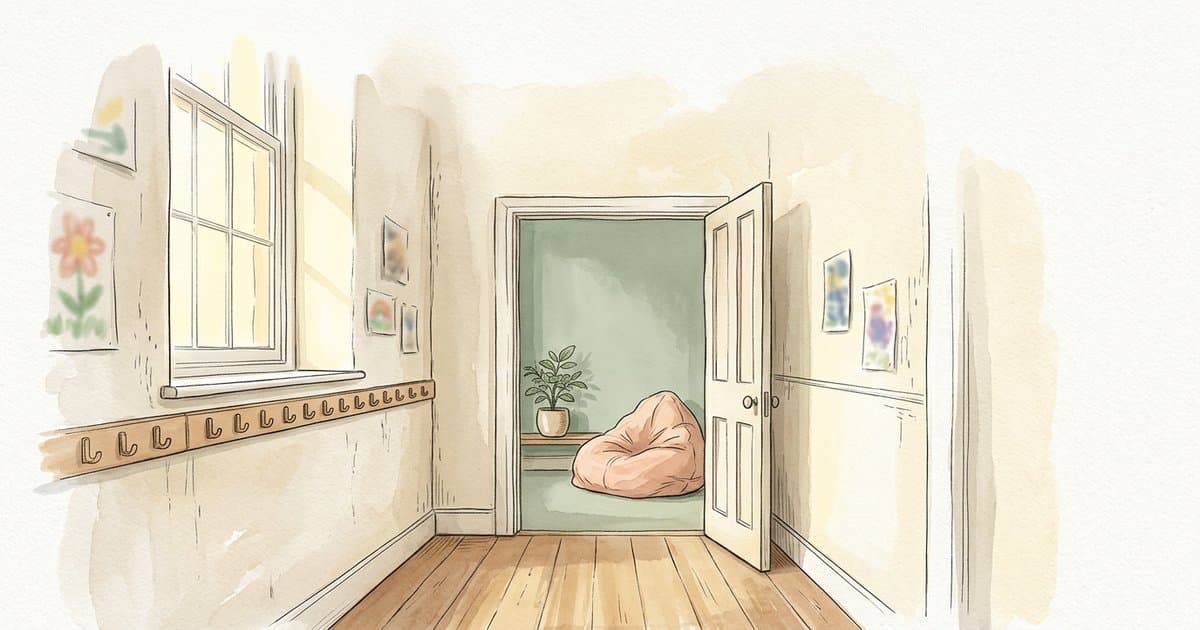
Schools sometimes use the word ‘seclusion’ to describe a child or young person being kept away from other people when emotions are running high. The problem is that the same word can be used to mean very different things: a calm, supervised space to regain regulation; an imposed isolation that feels like punishment; or, at the extreme end, a locked room. Because language gets blurred, teams can end up relying on ‘what we have always done’ rather than a clear, written decision-making framework.
At ProActive Approaches we read the rules on seclusion through #AimingForZero, the position our founder Simon Gower has held since 2016. A reduction target implies there is an acceptable number of restrictive interventions, and zero removes that permission. Seclusion is a restrictive intervention under the April 2026 DfE guidance, so the question for a school is not only whether its use was lawful, but what would have meant the pupil never needed to be kept apart. The law sets the floor. Our goal is zero.
This guide sets out practical, staff-friendly boundaries for what is generally considered acceptable, what is high-risk, and what should be avoided entirely. It also focuses on the governance steps that protect pupils and staff: clear definitions, recording, oversight, and learning from patterns. If you are reviewing policy, training, or incident processes, you can use this as a checklist to tighten practice quickly.
Important note: this is not legal advice. Always follow your setting’s policy, local authority guidance (where relevant), and take advice for complex cases. Where possible, align practice with your safeguarding processes and behaviour policy, including your approach to supporting pupils with SEND.
What people usually mean by ‘seclusion’ in a school context
In education, ‘seclusion’ is often used informally to mean a pupil is kept separately from peers, typically in a room or designated space. Sometimes that space is therapeutic and voluntary (a pupil chooses to go there and can leave), and sometimes it is coercive (a pupil is prevented from leaving). The safety, legality, and ethics change significantly depending on which version you are talking about.
A useful starting point is to define terms in your policy with real examples from your setting, so staff do not have to guess in the moment. For instance, your policy can distinguish between:
- Time out (voluntary): the pupil chooses to step away and can return when ready, with appropriate support.
- Withdrawal (supported): staff guide a pupil to a quieter area to reduce stimulation, but the pupil is not physically prevented from leaving.
- Seclusion (prevented exit): a pupil is kept in a room or space and is prevented from leaving, even if the door is not locked.
- Isolation (disciplinary): removal from peers as a sanction or consequence (for example, an isolation room) which should follow published behaviour policy and must not become a disguised restrictive practice.
Why does this matter? Because the more your approach involves restricting movement, the more you should treat it as a restrictive intervention that requires robust justification, monitoring, and an explicit plan to reduce use over time.
Core principle: prevention first, restriction last
Even when a pupil is presenting distressed behaviour, the safest and most effective approach is usually to reduce demands, increase predictability, and lower stimulation. Restrictive options tend to increase fear and can escalate risk if used as a default strategy. Many schools find that when they build strong proactive supports, the need for restriction drops substantially.
If your team wants practical skills that connect de-escalation, trauma-responsive thinking, and last-resort safety responses, the quickest route is structured training and a shared framework. Many schools start by reviewing their current incident types, then aligning staff development through physical intervention training and consistent post-incident learning.
When separation can be appropriate (and what makes it safer)
There are situations where separation from peers can be a sensible protective step, particularly when a pupil is overwhelmed and the environment is making things worse. The key is that separation should be supportive, time-limited, and as voluntary as the situation allows.
Indicators you are using a supportive approach
- The pupil is offered choice wherever possible (for example, ‘Would you like to go to the quiet room or sit in the corridor with me?’).
- A trusted adult stays available and uses calm, brief language.
- The space is safe, dignified, and not used as a threat.
- The pupil can leave as soon as they are able to do so safely.
- You are actively working to reduce the triggers that led to the situation (noise, crowding, unclear instructions, conflict, sensory overload).
CTA: If you are currently relying on a ‘reflection room’ or ‘calm room’, it is worth auditing how it is used in practice, not just what the written policy says. A short, structured review with your behaviour lead, SENCO and DSL can identify quick changes that reduce risk.
High-risk practices: when ‘seclusion’ becomes a restrictive intervention
Seclusion becomes high-risk when staff are preventing a pupil from leaving, physically or through environmental controls. Even without a locked door, blocking the exit or using staff positioning to prevent exit can have the same impact for the pupil and should be treated with the same seriousness.
In May 2026 commentary on Department for Education updates, restrictive interventions were described as including actions that limit a pupil’s movement, including seclusion, with an emphasis on recording and governance expectations for all incidents involving restraint or seclusion (Clyde & Co).
From a practical perspective, once you cross into preventing exit, you should be asking structured questions:
- What is the immediate risk? What harm are we preventing right now, and to whom?
- What have we already tried? What de-escalation and environmental adjustments have been attempted?
- Is this the least restrictive option? Is there a safer way to manage the risk (for example, increasing adult support, moving peers, changing the task, or using a different space)?
- How will we end it? What specific signs will tell us the pupil can leave safely?
What should be avoided entirely
Schools should avoid any practice that is dangerous, humiliating, or used as punishment. The risk is not only physical injury, but long-term trust damage, trauma responses, and escalation of future incidents.
Examples of practices to avoid
- Locked rooms or any situation where a pupil is locked in.
- Leaving a pupil unsupervised in a room where they are distressed or at risk.
- Using separation as a routine consequence for non-dangerous behaviour such as refusal, swearing, or disruption.
- Any force that interferes with breathing or circulation, including pressure to the neck, chest, or abdomen, which has been highlighted as prohibited in commentary on school restrictive intervention guidance (Clyde & Co).
Clear boundaries protect staff as well as pupils. When expectations are vague, staff may be left unsupported, especially after an incident when decisions are reviewed with hindsight.
Recording, reporting, and oversight: the part that prevents repeat incidents
Even strong teams can drift into over-use of restrictive options if they do not measure what is happening. Recording is not just paperwork; it is how you identify patterns and reduce risk over time.
Commentary on the 2026 updates emphasised expectations that schools record every significant use of force and all incidents involving restraint or seclusion, with written parent notification as soon as reasonably practicable and, where possible, on the same day (Clyde & Co).
Minimum recording fields to include in your incident form
- Date, time, location, and staff involved.
- What happened immediately before (antecedents) and what de-escalation was used.
- Whether the pupil was prevented from leaving (and how).
- Duration (start and end time) and what ended the incident.
- Any injury, medical checks, and any safeguarding concerns raised.
- Views of the pupil (where possible) and the staff debrief summary.
Governance that makes a difference
Good governance is not about blame. It is about learning and reducing future need. In practice this often means:
- Senior leaders review incidents weekly and look for patterns.
- Governors receive regular anonymised reports.
- Data is checked for disproportionate impact on pupils with SEND or other protected characteristics.
- Repeated incidents trigger a formal review of support plans and environmental factors.
Key takeaways
- Define your terms clearly: voluntary calm spaces are not the same as preventing exit.
- If a pupil is prevented from leaving, treat it as a restrictive intervention with enhanced safeguards.
- Use recording and oversight to reduce repeat incidents and protect staff and pupils.
- Build staff confidence in prevention so restrictive options become rarer.
Practical alternatives that reduce the likelihood of restrictive separation
Most schools can reduce reliance on restrictive options by improving the predictability of adult responses and increasing the availability of regulated spaces. Consider the following building blocks.
1) A shared de-escalation script
When a pupil is escalating, staff often say too much, too quickly. Agree a short script that prioritises safety and reduces verbal load. For example: ‘You are safe. I am here. We can move to a quieter place.’ Use the pupil’s name, avoid sarcasm, and keep requests simple.
2) Environmental adjustments
Small changes can prevent escalation: reducing crowding, changing seating plans, staggering transitions, or offering a predictable exit option. For neurodivergent pupils, sensory load can be a major driver, so think about noise, lighting, and visual clutter.
3) Co-regulation skills
Many pupils borrow an adult’s nervous system. Staff posture, tone, and pace matter. A calm adult presence can reduce the need for any separation. Training that blends prevention and last-resort safety responses can support this consistency across the whole staff group.
4) Individual support planning
If a pupil has repeated incidents, the goal should be to understand the function of the behaviour and strengthen protective factors. Plans should include what helps early, what helps mid-escalation, and what the team will do after an incident to repair and learn. Where appropriate, link this into EHCP outcomes and pastoral support plans.
CTA: If you have one or two pupils generating most incidents, prioritise a plan review that includes family voice, pupil voice, and staff reflection. This is often where reductions happen fastest.
How training fits: making sure staff can act safely in the moment
Staff are rarely deciding between ‘do nothing’ and ‘restrict’. More often they are deciding between several imperfect options while under pressure. Training gives staff a shared decision model, clearer language, and safer physical skills if immediate harm is likely.
In many settings, pairing restraint reduction training with a clear understanding of when and how physical contact can be used safely (as a last resort) is a practical way to align culture, policy, and day-to-day responses.
For school leaders who need support aligning policy, training, and post-incident learning, ProActive Schools can be a helpful starting point for finding the right fit and next steps.
CTA: If your policy uses the word ‘seclusion’ but staff interpretations vary, consider a short policy workshop followed by scenario-based practice. It is one of the most effective ways to reduce accidental drift into restrictive practice.
Frequently asked questions
Is it ever acceptable to block a door to stop a pupil leaving?
If you are physically preventing a pupil from leaving, you are using a restrictive intervention. That decision needs a clear, immediate safety justification, should be the least restrictive option available, and should be recorded and reviewed.
Can an isolation room be used for behaviour management?
Schools may use disciplinary consequences within their published behaviour policy, but if the practice becomes coercive, prolonged, or used when a pupil is distressed and unsafe, it can drift into a restrictive intervention. Clarity of purpose, time limits, supervision, and oversight are essential.
Do we need parental consent to use a calm space?
For voluntary, supportive use of a calm space, consent is usually about transparency and partnership rather than permission. However, if your practice involves restricting movement, you should seek advice and ensure robust governance and communication, including timely parent notification after incidents.
What should we do after an incident involving separation?
Complete recording promptly, notify parents as required by your policy, and hold a staff debrief focused on learning. Where possible, include the pupil’s perspective and plan repair. Repeated incidents should trigger a review of support planning and environmental factors.