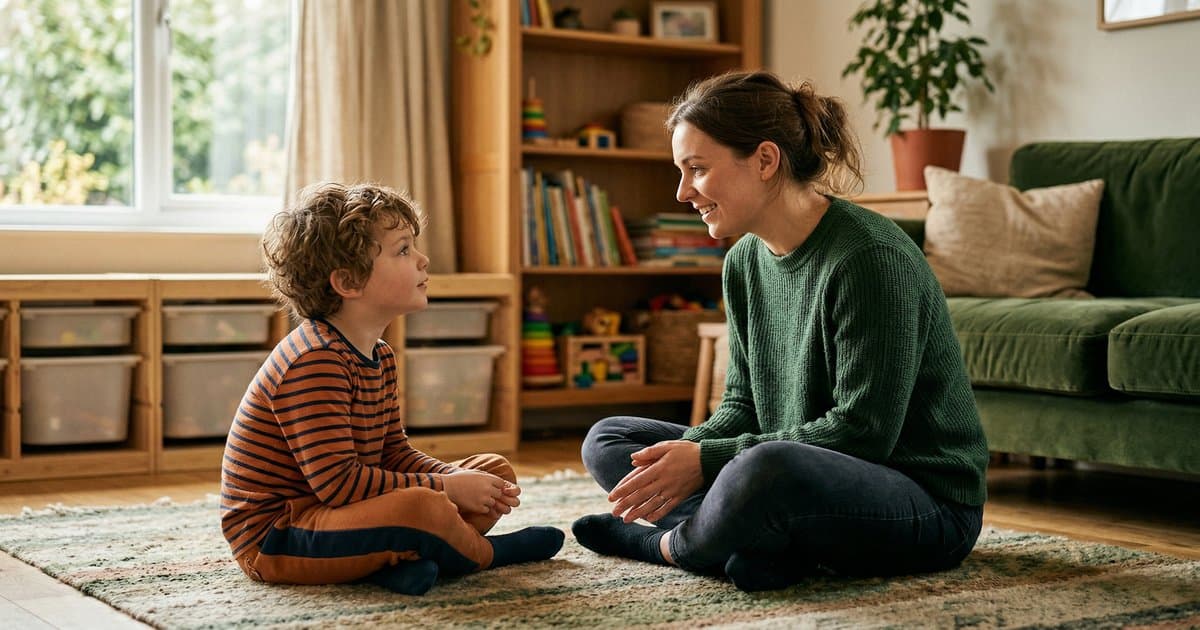
PACE intersubjectivity describes the combination of Dan Hughes' therapeutic model and the shared emotional experience between a child and their carer. When residential care staff use Playfulness, Acceptance, Curiosity, and Empathy as their relational stance, they create the conditions in which a traumatised child can begin to feel genuinely understood, and healing becomes possible.
- PACE stands for Playfulness, Acceptance, Curiosity, and Empathy: a relational stance developed by Dr Dan Hughes for working with children affected by trauma.
- Intersubjectivity means two people experiencing an emotion or meaning together simultaneously; it is the mechanism through which PACE actually works.
- Acceptance in PACE is unconditional acceptance of the child as a person, not acceptance of every behaviour.
- Curiosity replaces judgement: asking "what is this behaviour communicating?" instead of "how do I stop this behaviour?" changes the relational dynamic entirely.
- Residential care staff can apply PACE in everyday interactions, not just formal therapeutic sessions.
- Organisations that embed PACE within a trauma-informed practice framework see measurable reductions in distressed behaviour.
What is the PACE model?
Dr Dan Hughes developed PACE as a therapeutic framework for children with complex trauma and attachment difficulties. It is not a set of techniques to apply at difficult moments; it is a way of being in relationship with a child throughout every interaction of the day.
Hughes draws on attachment theory, intersubjective theory, and neuroscience to argue that children who have experienced early relational trauma need a specific kind of relationship before they can begin to heal. That relationship is defined by four qualities: Playfulness, Acceptance, Curiosity, and Empathy.
Playfulness
Playfulness does not mean being silly or avoiding difficult conversations. It means bringing lightness, creativity, and a sense of shared enjoyment into the relationship. A playful tone signals safety. It communicates to the child that the adult is not a threat and that moments of joy are permitted, even when life has been hard.
For residential care staff, playfulness might appear in the way a worker greets a young person in the morning, how they handle a minor misunderstanding with humour rather than confrontation, or how they find shared interests that create moments of genuine connection.
Acceptance
Acceptance is perhaps the most misunderstood element of PACE. It is unconditional positive regard for the child as a person, not blanket approval of every action. The child's inner world, their feelings, fears, shame, and desires, is always accepted as valid and real.
Hughes is clear: staff can set limits on behaviour while simultaneously accepting the emotional experience that drove that behaviour. This distinction matters enormously for children who have been rejected or who expect rejection. When a young person displays distressed behaviour and the adult responds with curiosity rather than rejection, the child's nervous system registers something new.
Curiosity
Curiosity means approaching a child's inner experience with genuine interest rather than judgement. A curious stance asks: what is this young person feeling right now? What might this distressed behaviour be communicating? What does this moment mean from inside their experience?
This shift, from asking "how do I manage this?" to "what is happening for this child?", is more than a semantic change. It changes the adult's body language, tone of voice, and the quality of their attention. Children with trauma histories are extraordinarily attuned to whether an adult's interest is genuine or performative.
Empathy
Empathy in the PACE model means communicating that the child's emotional experience makes sense, given what they have been through. It is not sympathy (feeling sorry for them) and it is not agreement with their behaviour. It is the active effort to feel alongside the child and to let them know their inner world has been noticed.
Empathy is expressed through tone of voice, facial expression, posture, and language. It often precedes any attempt to problem-solve or redirect. If you try to correct behaviour before the child feels understood, the interaction is likely to escalate.
If your team is ready to embed PACE across your residential service, browse our upcoming training events to find a programme that fits.
What is intersubjectivity, and why does it matter in care?
Intersubjectivity is the experience of sharing an internal state with another person simultaneously. The term comes from developmental psychology and philosophy, but its practical meaning is simple: two people experiencing the same feeling at the same time, and each knowing the other is experiencing it.
The developmental psychologist Colwyn Trevarthen identified intersubjectivity in mother-infant interactions. When a mother mirrors her baby's expression, amplifies it slightly, and the baby responds with delight, both are in a shared emotional space. This is the foundation of early emotional development and, crucially, the foundation of a child's sense of being a person who can be known and understood.
Why children in care have disrupted intersubjective experience
Children who grow up with neglect, abuse, or inconsistent caregiving often miss out on thousands of these intersubjective moments. Their early caregivers may have been unavailable, frightening, or unpredictable. As a result, many children in residential care have not had the experience of a responsive adult who reliably mirrors and validates their inner world.
This matters because intersubjectivity is how children develop their internal working models, their core beliefs about whether they are lovable, whether adults are safe, and whether the world is predictable. Without adequate intersubjective experience, these models tend toward shame, mistrust, and hypervigilance.
How PACE creates intersubjective moments
Each element of PACE is, in practice, an invitation to shared experience. When a worker uses a curious tone to reflect back a young person's feeling ("I wonder if that felt really unfair to you"), and the young person registers that the worker has understood something true about their inner world, that is an intersubjective moment.
These moments do not require therapeutic training to create. They require presence, attention, and the willingness to prioritise connection over correction. Over time, repeated intersubjective experiences with consistent, safe adults begin to revise the child's internal working model. This is what residential care for children can provide that many other environments cannot: sustained, repeated relational experiences with the same trusted adults.
How residential care staff use PACE in daily practice
One of the most important things to understand about PACE is that it lives in ordinary moments, not just in crisis responses or formal keywork sessions. The quality of a child's morning routine, mealtimes, and evening wind-down is shaped by whether the adults in the house are operating from a PACE stance.
Morning routines and transitions
Transitions are often the hardest moments for children with trauma histories. Moving from sleep to waking, from home to school, or between activities can trigger threat responses in a nervous system that has learned to expect danger.
A PACE-informed worker starts the morning with playfulness and warmth rather than immediately loading the young person with instructions and demands. They hold curiosity about why this particular morning might feel hard. They accept that a young person who is rude or withdrawn at 7am is communicating something about their internal state, not making a deliberate choice to be difficult.
Responding to distressed behaviour
When a young person displays distressed behaviour, the PACE response is not to immediately correct or sanction. The first step is empathy: communicating that the emotional experience underneath the behaviour has been noticed and is not going to cause the adult to withdraw.
This might sound like: "That looked really hard. I could see you were upset. What was going on for you?" The worker stays regulated, curious, and present. They do not match the young person's emotional intensity, but they do acknowledge it. This is what Hughes calls "co-regulation before self-regulation." The adult's regulated nervous system helps to settle the child's dysregulated one.
Our positive behaviour support training gives residential teams the practical skills to apply PACE responses consistently, even under pressure.
Keywork and one-to-one time
The keyworker relationship is the primary vehicle for PACE in residential care. Regular one-to-one time creates the conditions for deeper intersubjective exchange. A keyworker who brings genuine curiosity to their sessions, who is interested in the young person's experience rather than just their compliance, becomes an increasingly safe figure over time.
This is not about having perfect conversations. Repair after misattunement is as important as attunement itself. When a worker gets something wrong, acknowledges it, and reconnects, they are modelling something profoundly important: relationships can survive difficulty. This is often a genuinely new experience for children in residential care.
The neuroscience behind PACE and intersubjectivity
The case for PACE is not just theoretical. Neuroscience provides a clear account of why relational approaches produce better outcomes for traumatised children than purely behavioural ones.
The threat brain and why safety comes first
Children affected by early trauma often have nervous systems that are chronically dysregulated. Their threat-detection systems, centred in the amygdala, have been shaped by environments where danger was frequent and unpredictable. As a result, these children tend to perceive threat where none exists and to respond with fight, flight, or freeze.
This means that the brain areas responsible for learning, reflection, and emotional regulation are frequently offline. Dan Siegel's concept of the "window of tolerance" describes the optimal state for learning and connection. When a child is outside this window, whether in a state of hyperarousal or hypoarousal, they cannot engage meaningfully with instruction, consequence, or reason. What they need first is co-regulation from a calm adult.
Mirror neurons and shared experience
Research on mirror neurons offers a neurological account of intersubjectivity. When we observe another person's emotional expression, the same neural circuits activate in our own brains as if we were experiencing that emotion ourselves. This is the biological substrate of empathy and of the felt sense of being understood.
For children whose early mirror-neuron experiences were with frightening or unavailable caregivers, these circuits may be underactive or distorted. Safe, attuned relationships with residential care workers, repeated across months and years, can support the gradual recalibration of these systems. This is sometimes described as "earned security," the possibility of developing secure attachment patterns in later childhood and adolescence even when early attachment was disrupted.
Organisations using our programmes have documented up to an 80% reduction in incidents. Our training is certified against the Restraint Reduction Network Training Standards. Manchester Metropolitan University evaluated the RRN Training Standards as a national framework, not our programme directly.
Common misconceptions about PACE
PACE is sometimes misunderstood by staff who encounter it for the first time, and it is worth addressing the most common misconceptions directly.
"PACE means never setting boundaries"
This is a misreading of Acceptance. PACE does not mean all behaviour is permitted. It means all feelings are accepted. Staff still set limits, maintain routines, and apply consequences where appropriate. The difference is that these are delivered within a relational stance of warmth and curiosity, not punitiveness or rejection.
Hughes is explicit that children need both nurture and structure. The PACE model does not eliminate structure; it changes the emotional context in which structure is delivered. A boundary set from a place of genuine care lands very differently to a boundary set from frustration or authority.
"PACE is only for therapists"
Dan Hughes designed PACE for therapeutic practice, but he and many practitioners since have argued that it is most powerful when it becomes the whole-house culture of a residential setting. Residential care workers do not need to be therapists to use PACE; they need training, supervision, and organisational support.
A residential home where every adult operates from a PACE stance, not just in structured keywork sessions but in the kitchen, in the car, and at bedtime, provides something qualitatively different from one where PACE is the vocabulary of the therapist alone.
Frequently asked questions
What does PACE stand for in residential care?
PACE stands for Playfulness, Acceptance, Curiosity, and Empathy. It was developed by Dr Dan Hughes as a relational stance for working with children who have experienced trauma and attachment difficulties. In residential care, it guides how workers relate to young people across all daily interactions, not just formal sessions.
What is intersubjectivity in child development?
Intersubjectivity is the shared experience of an internal state between two people simultaneously. In child development, it refers to moments when a caregiver and child experience and recognise the same feeling together. These moments are foundational to emotional development, self-awareness, and the ability to feel genuinely known and understood by another person.
How does PACE help with distressed behaviour in residential settings?
PACE reframes distressed behaviour as communication rather than defiance. By approaching behaviour with curiosity (what is this young person communicating?) and empathy (their feeling makes sense given their history), staff avoid escalation and create the conditions for the young person to feel safe enough to reflect. Over time, this relational consistency reduces the frequency and intensity of distressed behaviour.
Can PACE be used by all residential care staff, not just therapists?
Yes. While PACE was developed in a therapeutic context, it is most effective when it becomes the whole-house relational culture. Care workers, support staff, and managers can all apply PACE principles. This requires training and ongoing supervision, but it does not require a therapeutic qualification. The key is consistency across all adults in the child's environment.
How does PACE relate to trauma-informed practice?
PACE is one of the most well-evidenced frameworks within trauma-informed practice. It addresses the relational component of trauma recovery: the need for safe, attuned, and consistent relationships with responsive adults. Trauma-informed practice provides the broader organisational and systems framework, while PACE describes the specific relational stance that makes it real for young people in day-to-day interactions.
Build a PACE culture in your residential service
PACE and intersubjectivity offer residential care staff a clear, evidence-based framework for understanding children affected by trauma and for relating to them in ways that actively support healing. This is not about perfection; it is about consistency, curiosity, and the willingness to stay in relationship even when things are hard.
ProActive Approaches has over 30 years of experience in residential childcare. Our training is BILD Act (RRN) certified. Manchester Metropolitan University evaluated the RRN Training Standards as a national framework, not our programme directly. To find the right programme for your team, view our upcoming events or get in touch with us directly.
For a deeper look at how secure attachment develops in residential settings, read our post on Dan Siegel's 4 S's of secure attachment.