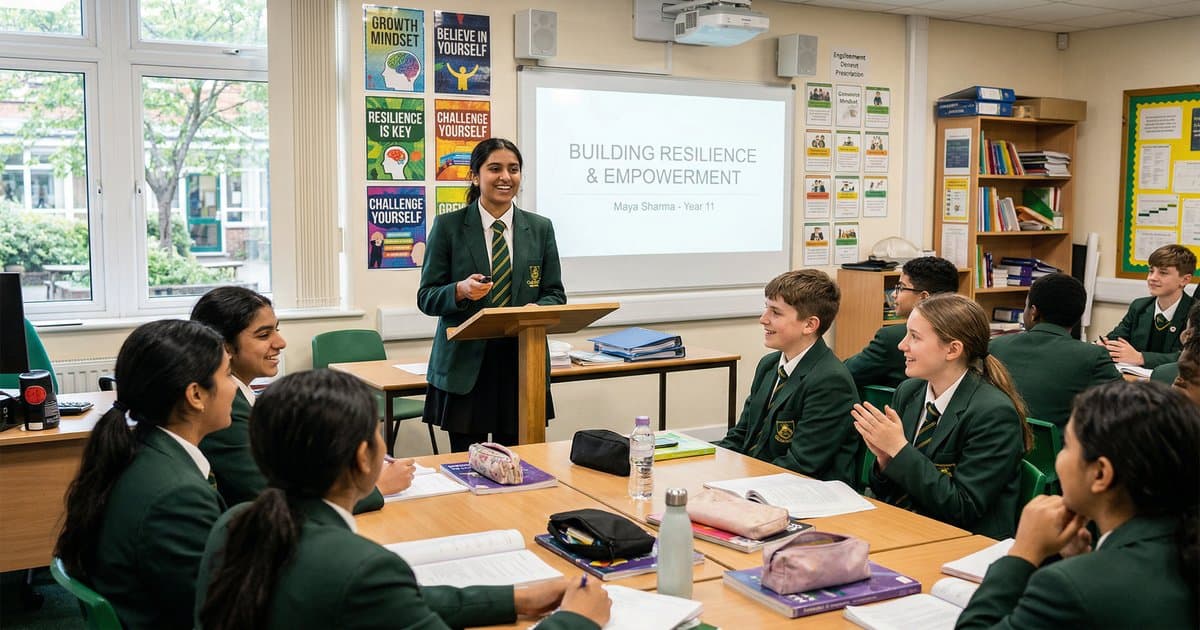
Building resilience in students’ mental health means strengthening a young person’s ability to adapt to stress, recover from setbacks, and stay connected to learning through safe relationships, predictable support, and practical coping skills. In schools, resilience is built day by day - through the way adults respond to distress, teach emotional regulation, and remove barriers to belonging.
- Resilience is a process shaped by relationships and environment, not a fixed trait a student either has or does not have.
- Early noticing - changes in behaviour, attendance, or engagement - enables supportive intervention before crisis escalates.
- Trauma-responsive practice prioritises regulation and relational safety so learning becomes possible again.
- Whole-school routines, common language, and consistent responses reduce stress and stigma for students and staff.
- Teaching coping and problem-solving skills works best when paired with practical adjustments that reduce overwhelm.
- Targeted help pathways and partnership with families strengthen outcomes for pupils with higher levels of need.
What resilience means for student mental health
Resilience is often described as “bouncing back”, but in education it is more helpful to treat it as an ongoing process. Mentally Healthy Schools defines resilience as “the process of adapting well in the face of adversity, trauma or stress”, and emphasises that it is not a special quality inside a child - it emerges through interactions with others and the wider environment. That matters because it shifts our focus from “fixing the child” to strengthening the conditions around them.
When a pupil is anxious, shut down, volatile, or persistently disengaged, the question becomes: what is their nervous system communicating, and what support will make school feel safer? Resilience grows when students experience adults who remain steady, curious, and consistent - especially when behaviour is challenging.
In trauma-responsive behaviour support, resilience includes the ability to ask for help, use a coping strategy, and repair after conflict. It also includes the school’s capacity to notice patterns, reduce triggers, and respond without shame-based approaches that intensify distress.
Resilience is not infinitely elastic
Some pupils face multiple “snowballing” stressors, including adverse childhood experiences (ACEs) and ongoing family pressures. Resilience can be stretched beyond what skills teaching alone can offset. A resilience approach therefore includes practical, compassionate adjustments - such as flexible transitions, structured check-ins, reduced sensory load, and supportive relationships - alongside explicit teaching of coping skills.
Spotting early signs and responding before crisis
Building resilience in students’ mental health starts with early noticing and low-drama support. In many schools, pupils do not suddenly “flip” into crisis - there are often weeks of signs: increased irritability, withdrawal, lateness, reduced concentration, friendship conflict, somatic complaints, or changes in work completion.
Early response is not about diagnosis. It is about creating a culture where adults can hold a calm, practical conversation and offer help without judgement. A brief check-in with a trusted adult, a predictable time-out plan, or a referral to pastoral support can prevent escalation and help a student feel seen.
Use a simple ‘notice, name, next step’ routine
Many teams find it helpful to use a consistent script: notice the change, name the support, and agree the next step. For example: “I’ve noticed you’ve been quieter this week. We can do a quick check-in now, or after break. Which would help?” This keeps the approach relational and choice-based, while still containing risk.
Reduce stigma by normalising help-seeking
Students are more likely to use supports when they are framed as normal tools for learning, not special treatment. When every class practises basic regulation strategies, and every tutor group has a shared language for stress, it reduces shame and improves participation.
Soft CTA: If you are planning staff development around wellbeing, take a look at upcoming dates on our training events page to find a format that suits your school calendar.
Building resilience through regulation and relational safety
Resilience is not built in the moment of crisis. It is built through repeated experiences of safety, predictability, and repair. When pupils feel threatened, the brain prioritises survival - fight, flight, freeze, or fawn - and learning becomes secondary. A trauma-responsive classroom therefore begins with regulation.
Regulation strategies are most effective when they are taught proactively, practised when calm, and modelled by adults. This includes breathing and grounding routines, but also environmental supports such as clear expectations, structured movement breaks, and calm transitions.
Co-regulation comes before self-regulation
Many children cannot “self-regulate” until they have experienced repeated co-regulation - an adult lending calm through tone, pace, boundaries, and attunement. Staff do not need to be therapists, but they do need permission and skills to prioritise relationship in the moments that matter.
De-escalation is a resilience skill for adults
When adults can de-escalate confidently, pupils experience fewer shame cycles and fewer ruptures. This is one reason ProActive Approaches delivers de-escalation training as part of a broader trauma-responsive approach, aligned to BILD Act (RRN) certified standards where required.
Whole-school foundations that strengthen resilience
Individual interventions help, but the biggest gains often come from whole-school conditions that lower stress for everyone. Resilience grows when expectations are predictable, consequences are fair and restorative, and support pathways are clear. This reduces “hidden curriculum” stress, especially for neurodivergent pupils and those with trauma histories.
A whole-school approach also protects staff. When teams share a common model and language, it reduces conflict, inconsistency, and the sense of isolation that can emerge when behaviour is challenging.
Create common language for stress and support
Agree simple terms for escalation stages and responses, so staff are not improvising under pressure. This might include shared cues for “I need a minute”, standard plans for exiting a classroom, and consistent ways to repair after incidents. Done well, this makes support feel predictable rather than punitive.
Make inclusion practical, not aspirational
Inclusion is strengthened by routines that anticipate stress: structured starts, clear task chunking, predictable transitions, accessible sensory supports, and choices that preserve dignity. These are resilience builders because they reduce repeated overwhelm, which can otherwise reinforce avoidance and anxiety.
For schools reviewing their approach across wellbeing, SEMH, and behaviour, our Schools hub brings together relevant programmes and implementation support.
Teaching coping skills without putting the burden on students
Skills matter - but a resilience curriculum should never imply that distress is a personal failure. Students benefit from being taught practical tools for emotional regulation, problem-solving, and help-seeking. They also benefit when adults adjust the environment so those skills are usable in real life.
Social and emotional learning (SEL), coaching conversations, and short “micro-lessons” on coping can all support mental health when they are embedded in everyday practice. The key is repetition, not novelty. A strategy a student practises weekly is more likely to appear under stress than one delivered in a one-off assembly.
Blend skills teaching with environmental adjustments
For example, if a pupil is learning grounding techniques for anxiety, ensure they have a safe, agreed place to use them. If they are learning how to ask for help, ensure every adult responds consistently when they do. Skills generalise when the system makes success likely.
Use repair and reflection to build resilience after incidents
Resilience includes the ability to repair after conflict. Short, structured restorative conversations help pupils reflect without shame, identify triggers, and plan alternatives. This supports belonging and reduces repeat incidents - particularly when the adult leads with curiosity and empathy.
Mid CTA: If you want a shared, trauma-responsive framework that strengthens staff confidence and reduces restrictive practice, explore our trauma-informed practice training and Positive Behaviour Support (PBS) options.
When additional support is needed: pathways, partnership, and safety
Even with strong universal provision, some pupils will need targeted or specialist support. Schools should be clear that staff are not expected to carry complex mental health needs alone. A resilience approach includes a practical pathway: who to involve, when to escalate, and how to work with families and external services.
Mentally Healthy Schools recommends partnership with parents and carers, and situating resilience work within a whole-school approach to mental health and wellbeing. In practice, this means consistent communication, shared plans, and careful attention to what is happening outside of school as well as inside it.
Keep plans simple and usable under pressure
Support plans should be short, visual, and easy to follow in real time. They should include early signs, what helps, what makes things worse, and agreed steps for escalation. Where safety risks exist, plans should also include clear roles, supervision expectations, and a debrief process that supports staff wellbeing.
Train for safety with dignity and human rights in mind
Where restrictive interventions are part of a setting’s risk profile, it is essential that training is safe, ethical, and accountable. ProActive Approaches is a BILD Act (RRN) certified training provider, and our programmes are designed to reduce the need for restrictive practice by strengthening prevention, de-escalation, and relational approaches.
Practical application: strategies you can implement this term
- Build a daily regulation routine: Start lessons with a 60-second grounding activity (breathing, sensory check, or a simple “ready to learn” scale) so regulation becomes normal, not a crisis tool.
- Create a consistent check-in system: Identify pupils who need additional support and schedule short check-ins with one trusted adult, with a clear plan for what happens if concern increases.
- Adopt a shared de-escalation script: Agree key phrases staff will use to reduce shame and increase choice (for example, “We can do this together” and “Let’s make a plan”). Practise it in team briefings.
- Design predictable ‘exit and return’ plans: Give pupils a dignified way to leave, regulate, and return to learning, with clear expectations and minimal attention from peers.
- Use post-incident repair, not punishment: Hold short restorative conversations that identify triggers, needs, and alternatives, then update the support plan so the pupil experiences progress rather than repeated failure.
FAQ
What is resilience in students’ mental health?
Resilience in students’ mental health is the process of adapting well when life is stressful, frightening, or uncertain. It is shaped by protective relationships, predictable environments, and skills that help pupils regulate emotions and seek support. In schools, resilience grows when adults respond to distress with calm, consistency, and repair.
How can schools build resilience without minimising trauma?
Schools build resilience best when they pair skills teaching with real changes to the environment. This includes predictable routines, relational safety, reduced shame, and practical adjustments that lower overwhelm. A trauma-responsive stance avoids implying pupils should simply “cope better” and instead strengthens the conditions that make coping possible.
What are early signs a student’s mental health may be declining?
Early signs can include changes in behaviour, sleepiness, withdrawal, irritability, attendance issues, reduced concentration, increased conflict, or a sudden drop in work completion. Rather than assuming defiance, start with curiosity and a brief check-in. Early, supportive action often prevents escalation into crisis.
How does de-escalation training support student resilience?
Effective de-escalation reduces the intensity and frequency of shame cycles, conflict, and crisis responses that can worsen mental health. When staff share practical scripts and strategies, pupils experience adults as predictable and safe, even when they are distressed. This consistency supports co-regulation and helps pupils return to learning sooner.
When should schools involve external mental health services?
Involve external services when risk is increasing, distress is persistent, or school-based support is not enough to keep the pupil safe and learning. Clear thresholds and pathways help staff act early. Work in partnership with families, document concerns, and seek advice through local early help, CAMHS pathways, or other appropriate services.
Closing CTA: If you want to strengthen resilience, reduce incidents, and build a calmer culture where students and staff can thrive, ProActive Approaches can help. Explore our BILD Act (RRN) certified programmes and book a place for your team through our training pages or upcoming events.